
When Koninklijke Paardekooper Group applied for a suspension of payments in August 2025 and was declared bankrupt shortly afterwards, virtually everyone pointed to the financial balance sheet. A series of acquisitions financed with a lot of debt. Interest that was insufficiently hedged. Real estate that was sold and leased back to enable further expansion. These are all valid explanations.
And yet that balance sheet tells only half the story.
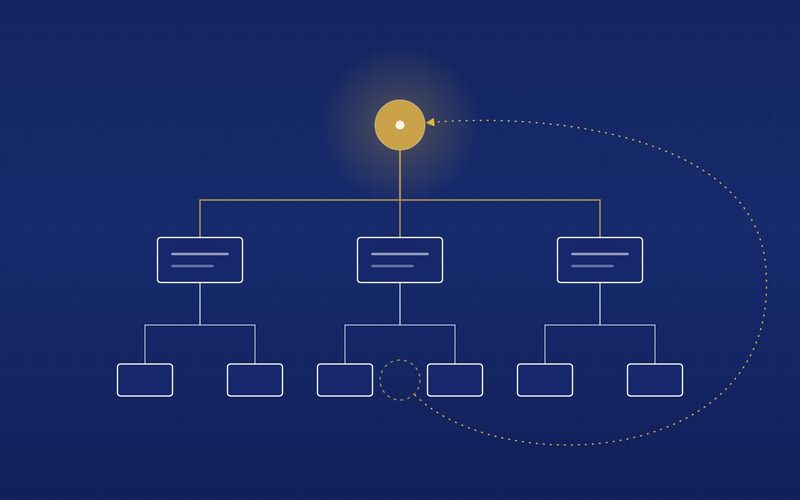
Anyone reading the reconstructions sees a second debt burden emerge. Acquired companies proved difficult to integrate. The rapidly grown organisation became increasingly hard to manage. Problems in purchasing, inventory management and decision-making piled up. Every item on that financial balance sheet was once a decision. Someone decided not to fix the interest rate. Someone decided to keep buying while the integration faltered. That quality of decision-making is recorded nowhere. That is the debt that ultimately proved fatal for Paardekooper — and that appeared on no balance sheet.
Every growing organisation borrows — even without a bank
In software development, the concept of technical debt has existed for decades. Developers sometimes deliberately choose speed over perfection. The software works, but beneath the surface a backlog builds up that has to be made up later — often at higher cost. Entrepreneur and Stanford lecturer Steve Blank translated this principle to organisations: organizational debt is all the postponed choices in leadership, structure, governance and decision-making that temporarily accelerate growth, but reduce adaptability over time.
That debt is not negative by definition. No scale-up starts with a perfect organisational model. Roles overlap, governance only grows along when the organisation demands it, and the founder combines functions for as long as possible. That is exactly what allows fast entrepreneurship. But there is a decisive difference from financial leverage: financial debt appears in every board pack. Organisational debt appears almost nowhere — until the moment the bill is presented.
This did not only happen to Paardekooper. VanMoof grew explosively for years but ultimately struggled with operational control and execution. Northvolt got stuck after the organisation tried to scale up on too many fronts at once. In neither case was capital the first problem.
What was once a strength becomes a limitation
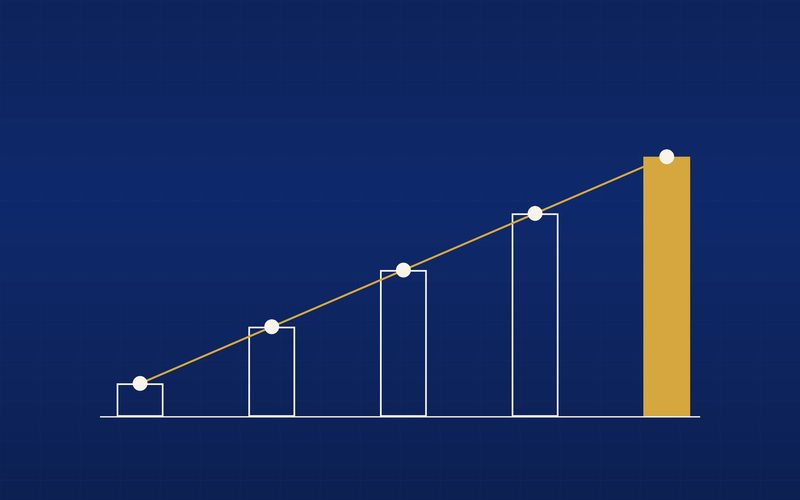
Just as financial debt carries interest, organisational debt has its own price. Decisions take longer because roles are unclear. Departments develop their own realities. Key figures become indispensable. Meetings replace decision-making. Harvard professor Larry Greiner described this mechanism as early as 1972: organisations grow through successive phases that each end in a predictable crisis. What made the previous phase successful becomes the limitation in the next. Professionalising is then no longer a choice, but a necessary refinancing of the organisation.
The risk deepens when organisations start even more initiatives at that very moment. In Harvard Business Review, Bruch and Menges described the acceleration trap: organisations that structurally start more change initiatives than their organisation can carry use up precisely the decision-making capacity they need for those initiatives. It is not the strategy that fails — the organisation becomes overloaded.
Harvard professor Amy Edmondson showed that teams in which people dare to name mistakes and risks demonstrably learn faster and perform better. The reverse also applies: organisations where that openness is lacking structurally make worse decisions — precisely at the moments when it matters most. The information that should have reached the top about the faltering integration, the rising inventory, the overstretched decision-making — apparently remained invisible for too long at Paardekooper.
How it does work
Then there is Constellation Software. The Canadian company completed hundreds of acquisitions without losing its power to execute — not because every deal was financially perfect, but because it consistently invests in leadership, autonomy, culture and clear governance. Acquired companies continue to operate autonomously. The organisational debt of the target is not taken over and piled up, but deliberately kept limited. The human side is not seen as 'soft' there, but as a precondition for actually realising financial value.
Closer to home, Visma shows the same pattern. The Norwegian software group grew in the Benelux from one company and 200 employees in 2018 to almost 4,000 employees and 38 companies. "The big difference is that Visma organises itself around the companies themselves, instead of the other way round," says Area Director Benelux John Reynders. Both organisations ask the question most buyers skip: how well does this organisation decide when we are not there?
Drawing up the second balance sheet
Drawing up that second balance sheet is not reserved for acquisition situations. The owner-director opening a new branch, the management team starting a transformation, the scale-up that is professionalising — all would be wise to first establish their actual capacity.
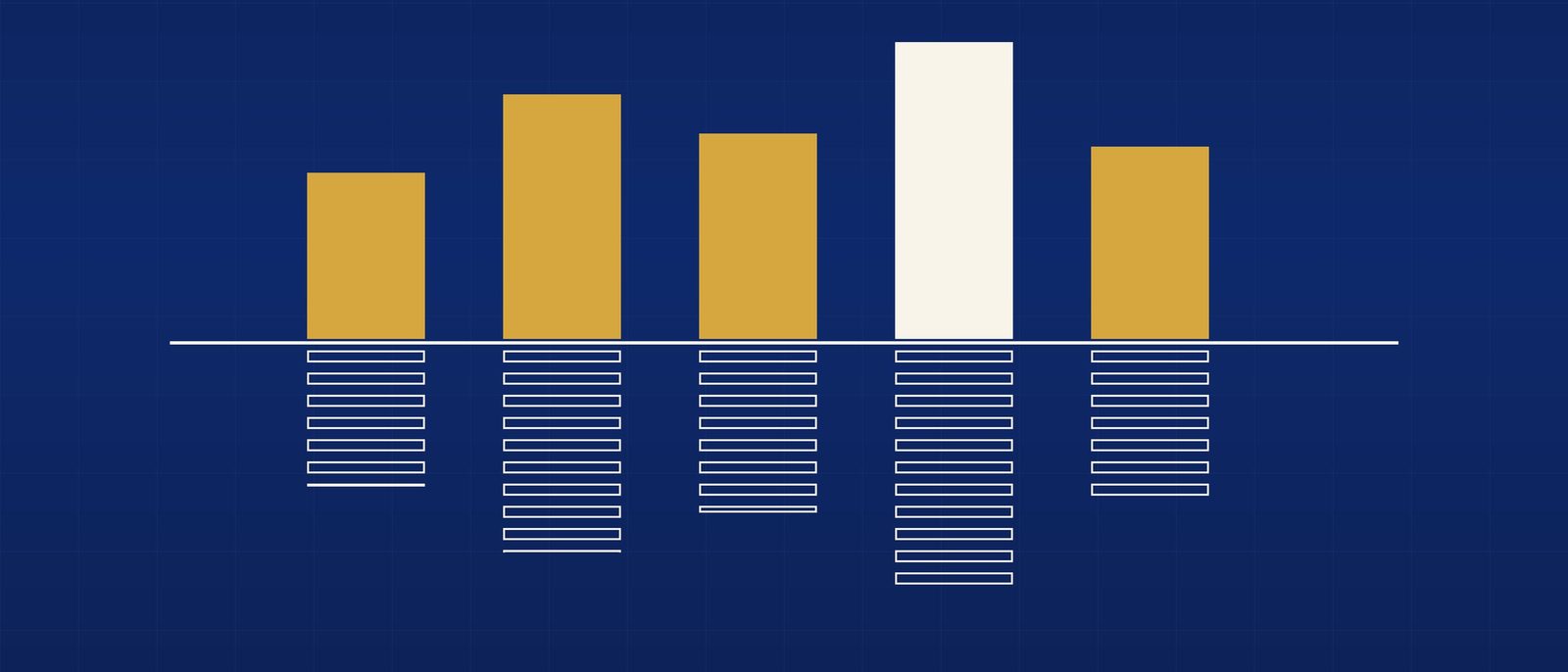
But nowhere does that balance sheet weigh as heavily as in mergers and acquisitions. No investor takes over a company without knowing the financial debt position down to the last decimal. Informal power structures, quality of leadership, key figures on whom too much rests, cultural differences — these factors almost always remain out of sight in the data room. Meanwhile, Harvard Business Review estimates that 70 to 90 per cent of acquisitions do not fully realise the intended value, and the cause rarely lies in the financial analysis but almost always in the human and organisational execution afterwards.
At HUMA Advisory, we call this human due diligence: a structured investigation into the organisational debt and decision-making capacity of an organisation — before investing, integrating or scaling up. Not as an HR exercise, but as a strategic audit. Because in the end, it is not the strategy that determines whether an organisation grows, nor the financing. The decisive question is whether the organisation can actually carry the growth.
So the question is not whether you need Human Due Diligence. The question is how much value you are prepared to put at stake without making that second balance sheet visible.
Curious what is on the second balance sheet of your organisation? Contact HUMA Advisory or take the Growth Phase Check.
How much value is your company leaving on the table?
Take the free HUMA Business Scan and see your value gap immediately. Or start with the Growth Phase Check.