

The signatures are in place. The financing is arranged, the legal structure is right and the value creation plan is ready. And yet: six months later the integration falters. Key people leave, energy leaks away and nobody can point out exactly where it went wrong.
Anyone who recognises this situation — as an investor, as a selling owner-director or as a member of a management team — knows that the answer is rarely found in the data room. It lies in a layer of the organisation that is examined in virtually no due diligence: the informal power structure.
In virtually every company there are people without a formal management position who nevertheless give direction to behaviour, collaboration and decision-making. Colleagues seek them out for advice, mirror their behaviour and trust their judgement. To a large extent, they determine whether a change is actually embraced — or invisibly slowed down. Especially in acquisitions, buy-outs and integrations, these informal leaders turn out to be among the most decisive factors for both success and risk.
Formal power is not the same as actual influence
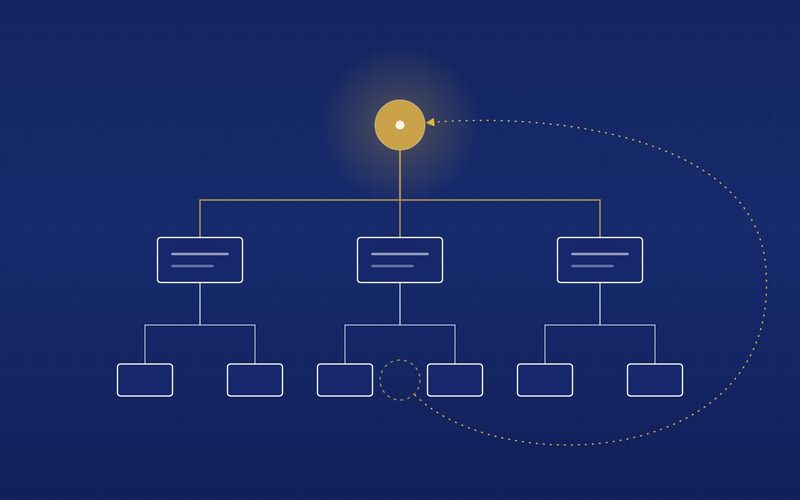
From a classical perspective, power seems to come from position: hierarchy, mandate, the organisation chart. Whoever is at the top sets the direction. Practice is more complex.
Organisational psychology has shown for decades that people do not follow changes because a director announces them, but because colleagues they trust embrace them. Research into informal networks — think of David Krackhardt's work on the hidden structure of organisations and Amy Edmondson's on psychological safety — consistently shows the same pattern: social influence and informal relationships predict behaviour better than formal authority.
The formal leader steers the change. The informal leader determines whether the organisation embraces it.
The hidden layer of every organisation
During an acquisition, a lot changes at once: new directors, shifting responsibilities, merged teams, a sharpened strategy. On paper, a new organisation is created. In reality, employees continue to orient themselves towards the people who have carried the culture for years — the colleagues who create trust, make tension discussable and connect departments.
This influence is described nowhere. Not in the organisation chart, not in job profiles and usually not in the due diligence report either. That is exactly why it is a structurally underestimated risk.
What the data room does not show
A thorough due diligence carefully maps financial, legal, tax and operational risks. Increasingly — and rightly so — an assessment of the management team is added. But even then, one question usually remains unanswered:
Who actually has influence within this organisation?
It is not the position but the social standing that determines who creates support, can remove resistance and connects teams. Anyone who leaves this social infrastructure out of the analysis bases the integration plan — and with it the business case — on an incomplete picture of the actual risk.
When power clashes with influence
During integrations, a second, less visible dynamic regularly arises. Informal leaders sometimes leave voluntarily, because they do not recognise themselves in the new course. In other cases they are — consciously or unconsciously — pushed to the sidelines: their influence feels like competition for the new formal structure.
From a political perspective, that seems understandable; new leaders want control and clarity. From an organisational psychology perspective, it is often a costly mistake. Because when an informal leader disappears, it is rarely just an employee who disappears.
The domino effect of departure
Informal leaders fulfil a connecting role: they give meaning to change and make sure colleagues feel safe to ask questions and voice concerns. If that link disappears, a chain reaction often follows. Trust declines, rumours gain ground, engagement drops and other key employees start considering leaving.
The consequences go beyond HR. Integrations are delayed, culture change stagnates, productivity falls and the intended synergy fails to materialise. What started as a human issue develops during the holding period into a financial and strategic risk — and puts pressure on the value creation the business case was built on.
Five questions for your next transaction
The quality of a deal is ultimately determined not by the transaction itself, but by the ability of people to build a new organisation together. That calls for questions that are still not asked enough in many transactions:
- Who actually has influence within the organisation — regardless of the organisation chart?
- Which informal leaders connect teams and departments?
- Where are the social dependencies that carry day-to-day collaboration?
- Which key people are crucial for trust and psychological safety?
- What risk arises when these people leave — or are sidelined?
Anyone who answers these questions before and during the integration sees where the real integration risk lies — and where the greatest lever for value creation is.
From organisational structure to organisational behaviour
Successful integrations require more than financial and legal analysis. They require insight into human behaviour, social networks and the informal power dynamics within organisations. Where formal leaders give direction to the change, informal leaders determine whether that change becomes part of daily practice. Anyone who understands these dynamics not only increases support — but also protects the value of the investment.
How HUMA helps
At HUMA, we make the human dynamics behind organisations visible. We combine organisational psychology, leadership analysis and data-driven network insights to map informal leaders, key people and social dependencies — the layer beneath the organisation chart, which remains out of sight in a classic management assessment.
This is how we help investors, owner-directors and management teams recognise hidden integration risks early. Not only before a transaction, but especially in the first hundred days after the acquisition — the period known in private equity practice as the 100-day plan, in which culture, leadership and collaboration take shape again.
Because lasting value creation does not come from a good deal alone. It arises when the people who make an organisation function every day are actually brought along in the change.
Curious what the informal power structure of your organisation — or your target — looks like? We would be happy to talk to you.
How much value is your company leaving on the table?
Take the free HUMA Business Scan and see your value gap immediately. Or start with the Growth Phase Check.