
After a merger or acquisition, culture integration is often put on the HR agenda. With a culture programme, workshops and a new set of core values, the organisation is supposed to grow together. But does that not miss the real issue?
Culture is not a programme you implement. It is the pattern of behaviour, decision-making and collaboration that emerges in daily practice. And that is exactly why culture integration is not an HR project, but a strategic issue.
Culture becomes visible in what people do
An organisation can formulate new core values, launch a culture programme and design a new organisational structure. But if leaders then set different priorities, decisions are taken in the same way as before and teams keep approaching each other from old patterns, little changes fundamentally.
Culture does not primarily manifest itself in what an organisation says it considers important, but in what is actually rewarded, tolerated and decided.
Who gains influence? Who is heard? How are conflicts discussed? How quickly are decisions made? And what happens when commercial results come under pressure?
It is precisely these behaviours that form the real culture of an organisation.
Integration on paper is not integration in practice
After an acquisition, structures, processes and systems are often harmonised relatively quickly. Reporting lines are adjusted, systems linked and responsibilities redistributed.
Unfortunately, the informal organisation often does not change at the same pace. As a result, existing power structures remain in place. The logical behaviours that follow are:
- Teams hold on to their own ways of working;
- Key people continue to exert influence outside the formal hierarchy;
- And leaders may have different expectations about ownership, decision-making and performance.
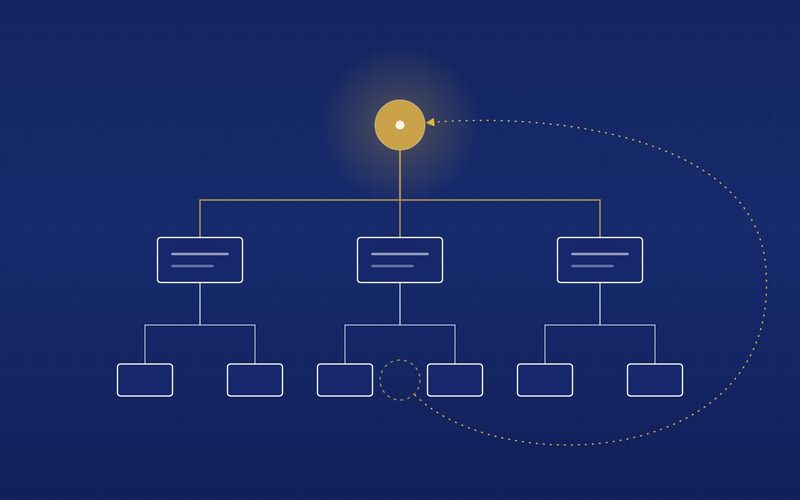
That is where the so-called cultural integration gap arises: formally the organisation is integrated, but in behaviour and collaboration different systems still function side by side.
The result is organisational friction. Decisions take longer, responsibilities become diffuse and employees once again try to figure out whom they can trust and where the real decisions are made.
Leadership is the most important carrier of culture
When two organisations come together, a period of ambiguity almost always follows. Old certainties disappear, new roles are formed and employees try to understand what the new reality asks of them.
And it is precisely in that phase that leadership is decisive.
Not only by explaining the strategy, but above all by showing consistent behaviour. Leaders determine which choices get priority, which behaviour is rewarded and where boundaries are set. In doing so, they effectively steer the cultural integration.
When the leadership team itself is divided, that division almost automatically translates into the rest of the organisation. When, on the other hand, leadership shows consistency, transparency and shared ownership, room for new behaviour emerges.
Culture transformation therefore does not start with employees, but with the leaders. Specifically with the way leaders steer, make decisions and deal with each other.
Decision-making shows whether culture really changes
One of the most underestimated indicators of culture integration is decision-making.
An organisation can say it values entrepreneurship and ownership. But if decisions are still taken centrally, risks are punished and employees need approval for every deviation, the behaviour tells a different story.
That is why analysing decision-making patterns is essential. Consider who actually makes the decisions, identify where delays arise, and find out where conflicts are left unspoken. It is also worth examining which informal networks determine the outcome.
These factors often give a more reliable picture of the organisational culture than an employee satisfaction survey or a list of core values.
From culture programme to organisational transformation
Culture integration should not be approached as a separate change programme alongside the business. It must be part of the way the organisation executes its strategy. For CEOs and boards, this is an important shift.
That means culture, leadership, governance and decision-making have to be considered together. Not only: what culture do we want? But above all: what behaviour do we need to realise our strategy?
This shifts the focus from culture as an abstract concept to culture as the power to execute.
An organisation in which people subscribe to the same values but do not work together effectively creates little value. An organisation in which leadership, decision-making and behaviour reinforce each other, on the other hand, has an important competitive advantage: the ability to actually turn strategy into results. That is where the strength lies.
Culture integration as strategic execution
At HUMA Advisory, we look beyond culture surveys and change programmes. We map the underlying dynamics of organisations: leadership style, behaviour, decision-making, informal power structures, collaboration and the patterns that strengthen or limit the power to execute.
Based on that diagnosis, we guide CEOs and management teams through organisational and cultural transformations. Not by designing a desired culture from the top down, but by creating the conditions in which new behaviour can actually emerge and last.
Culture does not change when an organisation says how it wants to work, but when leaders start acting differently, people start working together differently and decisions are actually made differently. Action = reaction.
We help organisations make that movement visible, concrete and lasting.
How much value is your company leaving on the table?
Take the free HUMA Business Scan and see your value gap immediately. Or start with the Growth Phase Check.